Blocked Drains Pakenham: Causes and Safe Fixes
A slow sink, gurgling toilet or drain that keeps backing up can be more than a nuisance. It may point to a local blockage or a problem further along the pipe. This guide covers common causes of blocked drains in Pakenham, a few low-risk checks you can try and the signs that it is time to call a blocked drain plumber.
Homes across Pakenham, Officer, Beaconsfield, Berwick, Narre Warren, Cranbourne, Koo Wee Rup, Cardinia, Emerald and Bunyip can have different drainage layouts and pipe conditions. If a simple check does not help, avoid forcing the issue; a plumber can investigate the cause and recommend a safe repair.
What causes a blocked drain?
Kitchen sinks often slow down when fats, oils, food scraps or soap residue build up inside the waste pipe. Bathroom basins and showers commonly collect hair, soap and personal-care products. Toilets may block when unsuitable items are flushed or too much paper is used at once. Outside, leaves, soil and debris can cover a gully or stormwater grate.
Tree roots can enter small cracks or joints in underground pipes as they seek moisture. Root intrusion may lead to recurring blockages, slow drainage, gurgling or wastewater appearing where it should not. A recurring problem is a reason to investigate rather than repeatedly clearing the same drain. Only an inspection can confirm whether roots or another pipe fault are involved.
Older, damaged or poorly graded pipes can also restrict flow. Newer homes may still experience blockages from construction debris, household waste or an obstruction in a shared or external section. The place where water backs up can offer clues, but it does not always identify the exact location.
How to unblock a drain safely
Start with a simple observation. Check whether one fixture is affected or whether several sinks, toilets or floor drains are slow at the same time. If only one basin is affected, the blockage may be close to that fixture. If multiple fixtures are backing up, stop using water where possible and contact a plumber, as the issue may be further down the drainage line.
Try a plunger on a local blockage
A clean plunger may help with a minor blockage in a sink or toilet. Use the correct plunger for the fixture, create a good seal and work gently. Do not use a plunger if you have already poured a chemical drain product into the fixture, because splashing could expose you to the chemical. Follow any product label instructions and tell the plumber what was used.
Clear a visible grate or strainer
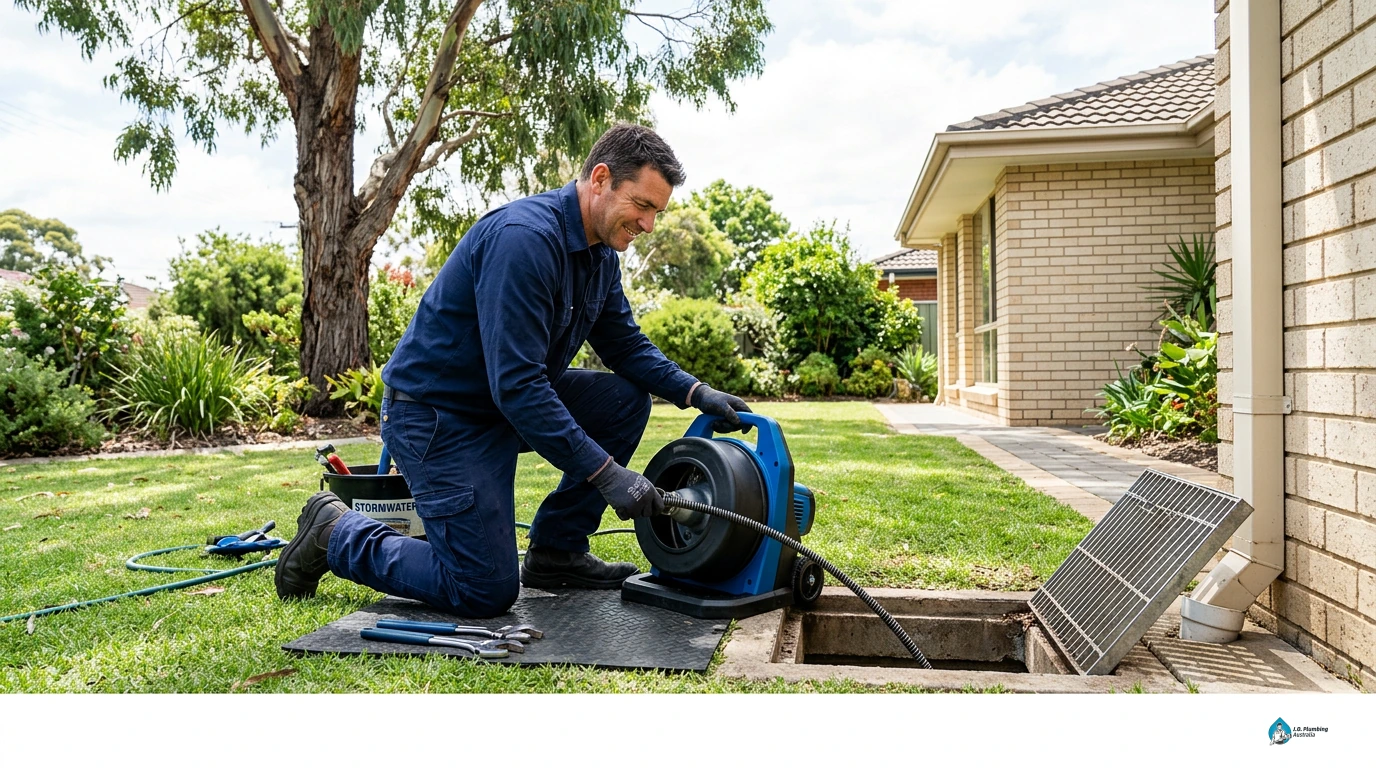
For an outdoor grate or shower strainer, remove visible leaves or hair by hand while wearing gloves, then dispose of the debris safely. Do not reach into a drain opening or remove a heavy cover if you are unsure how to lift it. Keep children and pets away while you work.
Use hot water carefully for a slow sink
If the sink is slow and there is no chemical cleaner in it, a modest amount of warm water may help shift greasy residue. Avoid pouring boiling water into a fixture, especially if you do not know the pipe material or the sink contains standing water. Warm water will not solve a deep or recurring blockage, and you should stop if water begins to rise.
What not to put down a blocked drain
Avoid mixing drain-cleaning products or combining them with bleach, acids or other household chemicals. Mixing products can produce dangerous fumes or splashes. Chemical cleaners may also damage some plumbing materials and can make a plumber’s work hazardous. If you have used a product, keep its container or note the name and tell the plumber before they begin.
Do not push a wire coat hanger, sharp object or improvised tool into a pipe. It can puncture or damage the pipe, get stuck or push the blockage further along. Powered drain equipment and high-pressure cleaning are not casual DIY tools; they can cause injury or pipe damage if used incorrectly.
Signs you need a blocked drain plumber
Call a plumber when the blockage persists after a simple, safe attempt, comes back repeatedly or affects more than one fixture. A blocked drain plumber can assess whether the issue is close to the fixture, in a branch line or in an external drain. If the cause is not visible, suitable inspection equipment may help locate the obstruction before work is recommended.
- Several fixtures are slow or backing up at the same time.
- Water or sewage is rising through a floor waste, shower or toilet.
- You hear repeated gurgling or notice an unpleasant sewer smell.
- The same drain blocks again soon after it has been cleared.
- There is a wet patch, unexplained pooling or subsidence near a drain line.
- You suspect tree roots or a damaged underground pipe.
If sewage is backing up, avoid contact with the water, keep children and pets away, and stop using affected fixtures. Do not attempt to clean contaminated water without appropriate protection. If there is flooding near electrical equipment, stay clear and treat it as an electrical safety risk.
Why recurring blockages need a proper diagnosis
Clearing a blockage may restore flow without resolving why it formed. If roots, a cracked pipe, a displaced joint or a persistent build-up is present, the symptoms may return. A plumber can explain what they find and discuss options based on the location and condition of the drain. Ask what the inspection shows, what the recommended work addresses and whether any follow-up is appropriate.
In leafy streets and established gardens around Berwick, Emerald, Bunyip and parts of Pakenham, trees and landscaping can be relevant to underground drainage, but it is important not to assume roots are the cause. A clear diagnosis avoids unnecessary digging or treatment and helps target the actual problem.
Frequently asked questions
How do I unblock a slow draining sink?
Remove visible debris from the strainer and try a clean plunger if no chemical cleaner has been used. Stop if water rises or the blockage persists, and arrange a plumber to investigate.
Can tree roots block a drain?
Yes. Roots can enter cracks or joints in underground pipes, but an inspection is needed to confirm the cause. Repeated blockages or gurgling may warrant professional assessment.
Should I use chemical drain cleaner?
Use caution. Never mix products, follow the label and do not use a plunger after adding chemicals. Tell your plumber if a cleaner has been used; a simple mechanical check may be safer.
Why are several drains blocked at once?
When multiple fixtures are affected, the obstruction may be in a shared or main drain rather than at one sink. Reduce water use and contact a plumber for assessment.
Book help for blocked drains in Pakenham
If you have a persistent blockage, get in touch with J.O Plumbing to book a visit. Tell us which fixtures are affected, whether the problem keeps returning and whether any drain product has been used. That information can help prepare for an assessment at your Pakenham-area home.
Local plumbers near you