
info@joplumbing.com.au
    HomeServicesLeak Detection
    Find hidden leaks · Licensed & insured in Victoria

    Leak Detection Melbourne — Find Hidden Leaks Without the Damage

    We provide non-invasive water leak detection across Melbourne's eastern suburbs. A hidden leak rarely announces itself — usually you notice a damp skirting board, a strange sound in the wall when nothing is running, or a water bill that's quietly doubled. The challenge isn't fixing it; it's locating it without smashing every wall in the house. Here's how modern non-invasive detection works, what it costs, and the warning signs you shouldn't ignore.

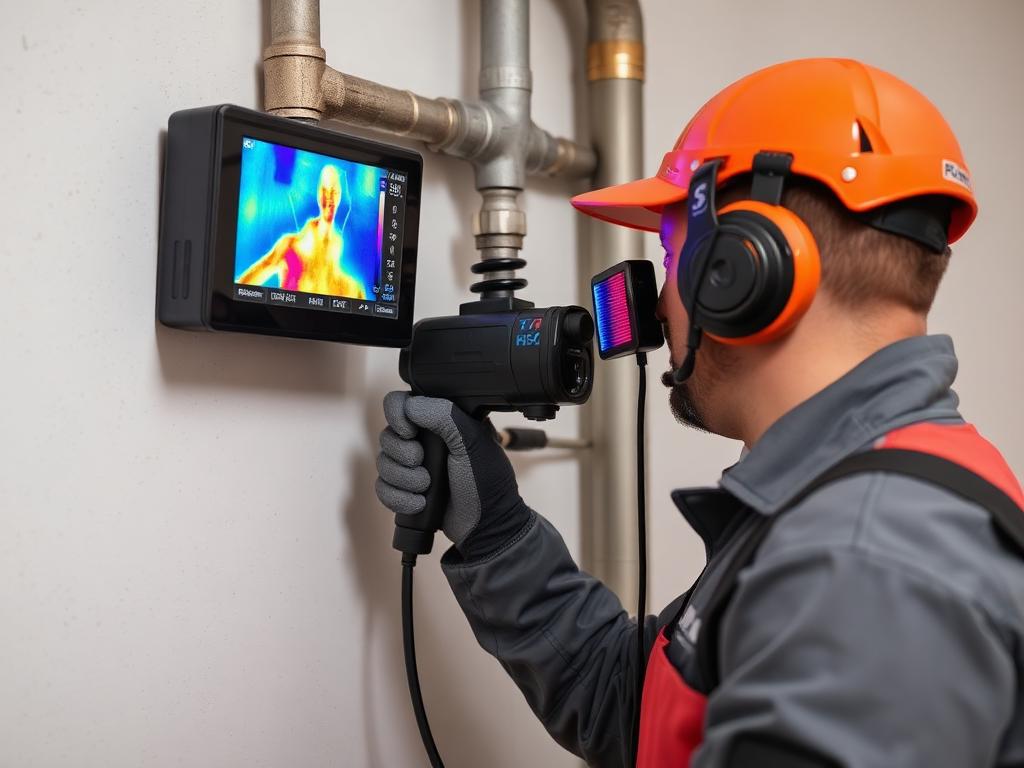
    • Thermal imaging cameras reveal warm water leaks behind walls and under tiles
    • Acoustic ground microphones pinpoint slab leaks to within centimetres
    • Pressure-loss testing on hot, cold and gas lines
    • We locate first, then repair — same licensed team, no second call-out fee
    Leak Detection service in Melbourne by J.O. Plumbing

    VBA licensed

    Plumbing & gas

    Same-day

    Eastern suburbs

    Fixed price

    Quoted in writing

    5.0 rating

    200+ reviews

    What homeowners ask us

    Honest answers before you book

    No jargon, no upsells — just the information we'd want if it were our home.

    1

    Five signs you have a hidden leak right now

    (1) Water meter ticking when every tap and toilet is off. (2) Unexplained damp patches on walls, ceilings or skirting boards. (3) A musty smell in one room that doesn't go away. (4) Hot-water unit running more often than it used to. (5) A sudden jump in your water bill with no change in usage. Any two of these together is worth a $0 phone call.

    2

    Why DIY 'leak finding' doesn't work

    By the time you can see a damp patch, the actual leak is often 1–2 metres away — water travels along beams, pipes and slab joints before it surfaces. Cutting open the visible damp spot usually finds nothing and leaves you with a hole to patch. Acoustic and thermal equipment costs us tens of thousands and trains the operator over years; it pays for itself the first time it saves a wall.

    3

    Slab leaks vs. wall leaks vs. roof leaks

    Slab leaks (under your concrete floor) are the trickiest and most expensive to ignore — they undermine the slab and ruin flooring. Wall leaks are usually pinhole pipe failures and are cheaper to repair than to find. Water marks on a ceiling can be plumbing OR roof — we'll rule out plumbing in the first 30 minutes so you know who to call next if it's the roof.

    Signs of a hidden water leak

    • A water bill that's suddenly higher with no change in use
    • The sound of running water when nothing is on
    • Damp patches, peeling paint or mould on walls or ceilings
    • Warm spots on the floor (often a hot water pipe leaking under the slab)
    • Lush green patches on the lawn while the rest is dry

    More detail in our guides to hidden water leak signs and the 5 warning signs of a hidden leak.

    How non-invasive leak detection works

    Modern leak detection is non-invasive. Thermal cameras show where warm water is escaping behind walls and under tiles, and acoustic listening gear picks up the sound of water escaping from pressurised pipes. That means we don't have to smash walls or dig up floors to find the source.

    We locate first, then repair — the same licensed team, with no second call-out fee.

    Shower and bathroom leak detection

    Bathroom leaks often start as a damp skirting board or mould in the room next door. By the time you see it, the actual leak can be a metre or two away. Thermal imaging lets us trace it back through the wall or under the tiles without pulling the bathroom apart.

    Leaks under the slab

    Slab leaks are the trickiest to find and the most expensive to ignore — they undermine the slab and ruin flooring. Warm spots on the floor and a water meter that ticks while everything is off are the classic signs. Acoustic ground microphones pinpoint slab leaks to within centimetres.

    Watch before you book

    What to expect when we arrive

    Short videos walking you through exactly what happens on a leak detection job — so there are no surprises.

    What to expect

    From the moment we knock until we leave the site clean.

    Coming soon

    How it works

    The actual leak detection process, explained in plain English.

    Coming soon

    Cost & options

    What drives the price and which option suits your situation.

    Coming soon

    Our process

    Four steps, zero surprises

    The same process whether it's a $250 tap repair or a $15,000 relining job.

    01

    You call or request a quote

    Speak to a real plumber — never a call centre. We listen first, ask the right questions and book the right slot.

    02

    We diagnose on site

    Licensed plumber arrives in a marked van. We assess, explain what we find, and show you the actual issue.

    03

    Fixed quote in writing

    You see the price before any work starts. If there are options, you see all of them — repair vs replace, dig vs reline.

    04

    We fix it & clean up

    Workmanship guaranteed. Compliance certificate where required. Site left cleaner than we found it.

    Verified reviews

    What Melbourne homeowners say

    Live Google & Facebook reviews — updated automatically as our customers post them.

    FAQs

    Questions we get every week

    Still not sure? Call us — there's no charge for a phone conversation.

    Do you have to break tiles or walls to find a leak?
    Not to find it — thermal imaging and acoustic detection are non-invasive. Repair access depends on where the leak ends up, and we'll always show you the smallest possible cut before opening anything.
    How much does professional leak detection cost in Melbourne?
    Detection typically runs $330–$650 depending on the size of the property and whether it's a hot, cold, gas or under-slab leak. Repair is quoted separately once the leak is located.
    Will my insurer pay for the detection?
    Many home policies cover the cost of finding a leak (not just repairing it) when a claim is involved. We provide an itemised report you can submit to your insurer.
    How do plumbers find a hidden water leak?
    We use thermal imaging cameras to spot warm water behind walls and under tiles, acoustic listening gear to hear leaks under slabs, and pressure-loss testing on hot, cold and gas lines.
    Can you find a leak under a concrete slab?
    Yes. Acoustic ground microphones pinpoint slab leaks to within centimetres, so repair access can be kept as small as possible.
    How do I know if my shower is leaking?
    Look for damp or mouldy skirting boards or walls next to the shower, loose or drummy tiles, stained ceilings below an upstairs bathroom, or a musty smell that won't go away.

    Book your leak detection job today

    Same-day service across Melbourne's eastern suburbs. Speak to a licensed plumber 24/7 — fixed price quoted before any work starts.